Find out more
Contact Barwon Coast at the following

26 October 2026
Two nests have failed and two remain along our coastline.
26 October 2026
Expressions of interest are now open for temporary summer food vendor permits across Barwon Coast Caravan Parks from 19 December 2026 to 31 January 2027.
15 October 2026
Great news for Hooded Plovers, with two new nests identified at Thirteenth Beach
13 October 2026
Filming for a car commercial is taking place in Barwon Heads on Wednesday 14 October.
7 October 2026
Hooded Plover breeding season is underway across our coast, with a new nest now confirmed.
Trial commences 0%
Trial completes %
Reporting back 0%
Published on 27 October 2026
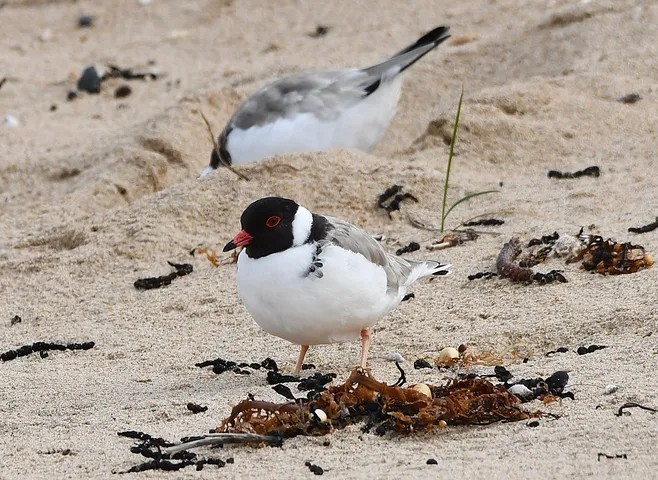
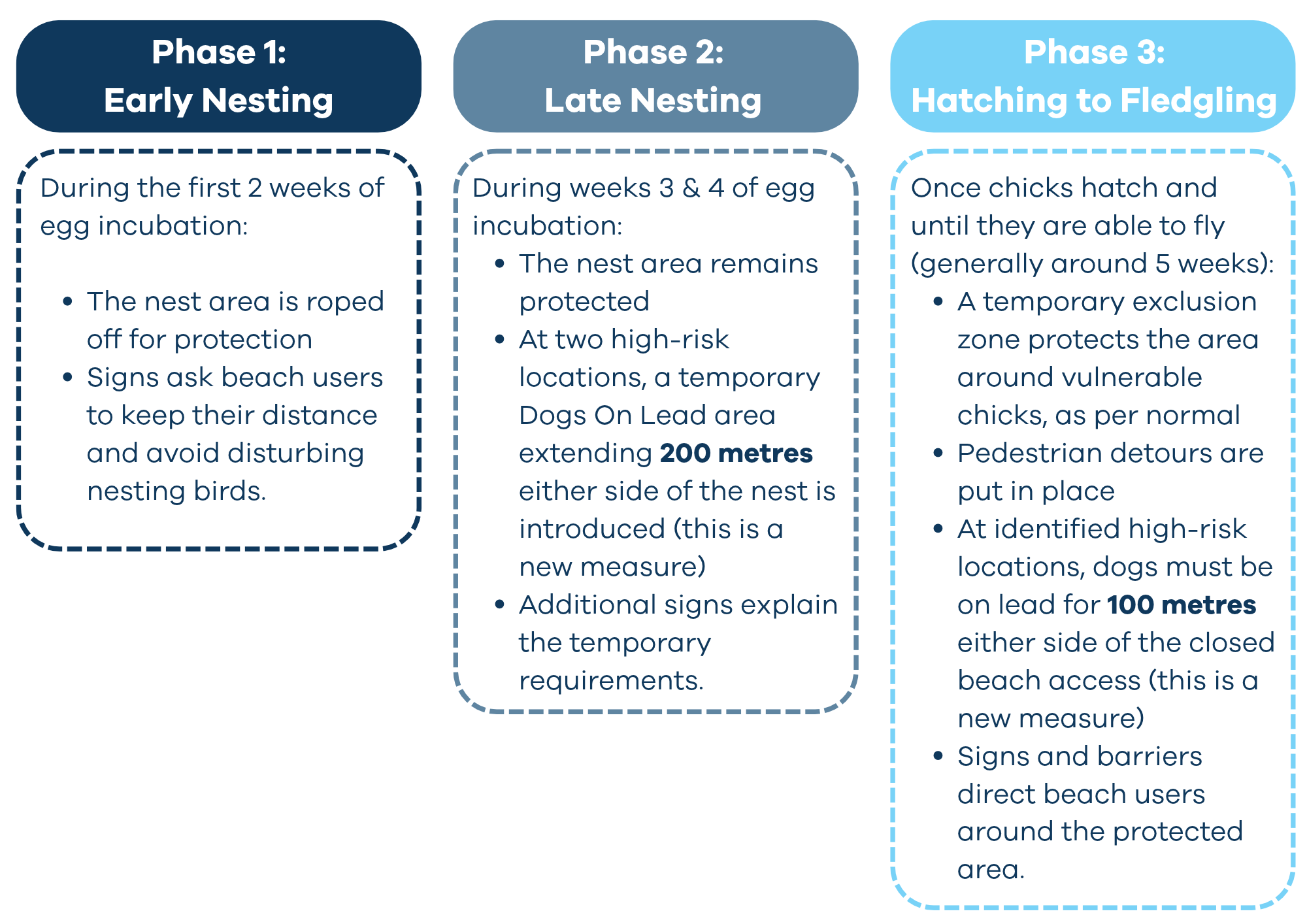
Barwon Coast is trialling a new three-phase approach to protecting Hooded Plovers at selected high-risk breeding locations during the 2026–27 breeding season.
The trial introduces different levels of protection as nesting progresses – from egg laying through to hatching and the vulnerable period before chicks can fly.
The aim is to provide protection that responds to the level of risk at different stages, while making it clearer for beach users to understand what they need to do.
We want to hear from our community about how the trial is working.
If you visit one of the trial areas, we encourage you to complete our short survey and tell us what worked well, what could be improved and whether the new approach and communications were clear and effective.
Complete the community feedback survey
Feedback, engagement data and observations throughout the breeding season will help inform our future approach to Hooded Plover protection.
Want to know when Hooded Plovers are nesting and temporary protections are introduced? Sign up for Hooded Plover updates to receive information about:
Sign up for Hooded Plover updates
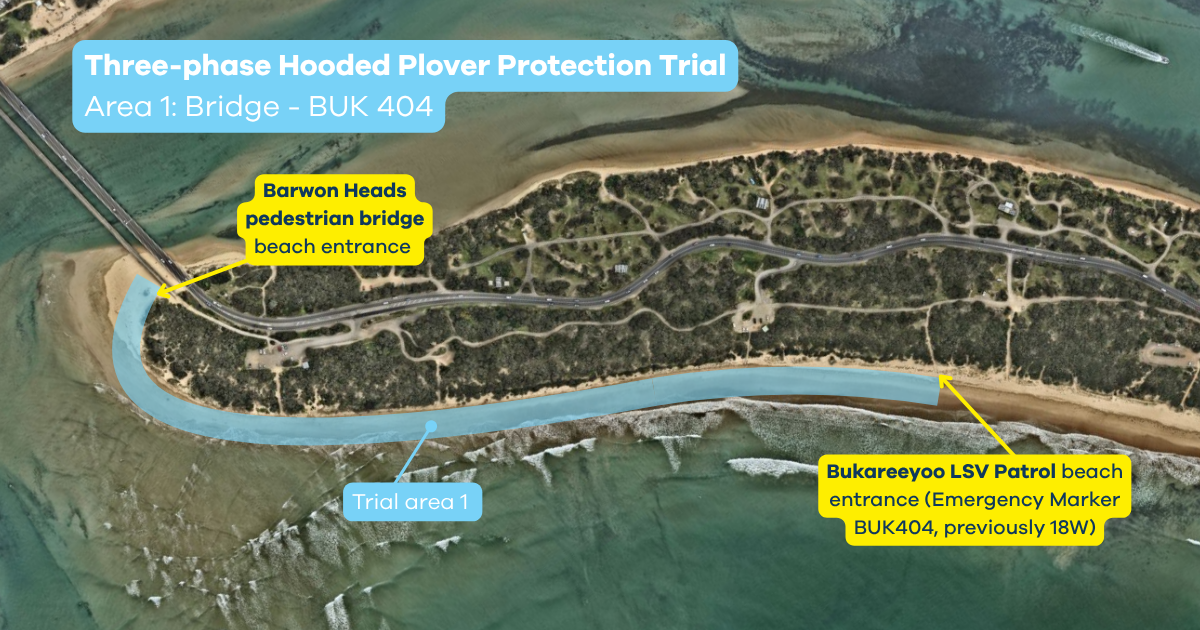
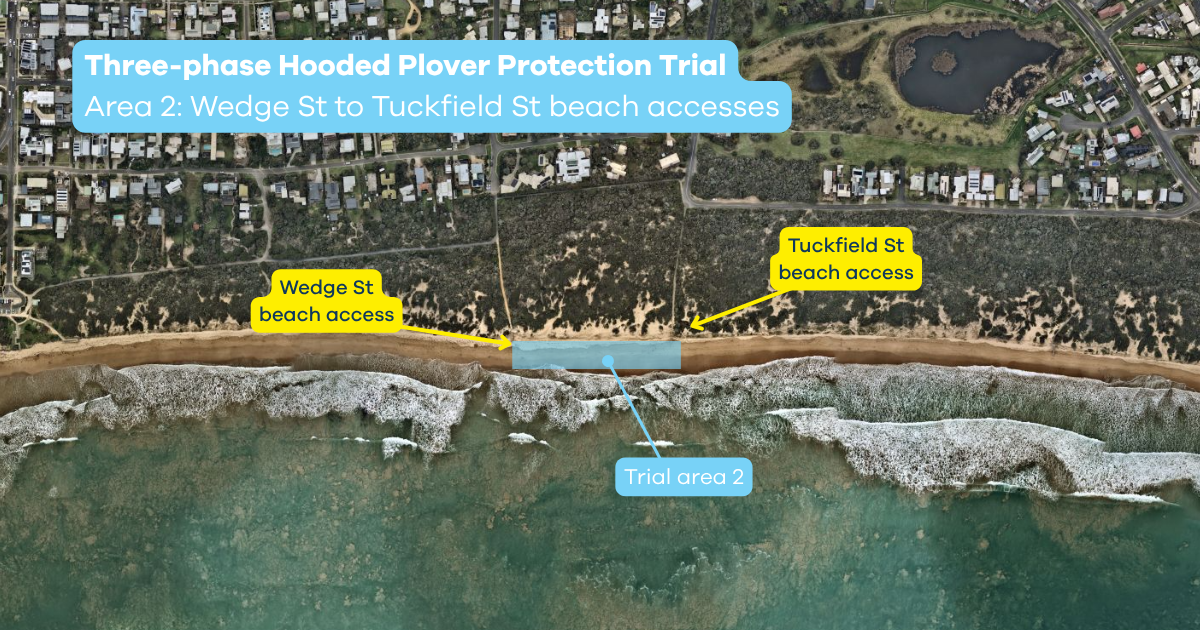
The trial applies when Hooded Plovers nest within two identified high-risk areas:
Hooded Plovers nest directly on the beach, making their eggs and chicks particularly vulnerable to disturbance from people and dogs.
Our existing protection approach has two stages. The trial introduces a third phase and additional temporary protections at high-risk locations, particularly as eggs approach hatching and while chicks are moving along the beach.
This allows protections to respond to the changing level of risk throughout the nesting cycle.
When does the trial run?
The trial will operate during the 2026–27 Hooded Plover breeding season, beginning on 1 November 2026 and continuing until the end of the breeding season in 2027.
Protections will only be introduced where required in response to Hooded Plover nesting activity within the two trial areas.
Why have these locations been selected?
The two areas have been identified as high-risk Hooded Plover breeding locations because of the interaction between nesting birds, beach users and dogs.
The trial will help Barwon Coast understand whether additional protections at different stages of the nesting cycle can improve outcomes for Hooded Plovers while providing clear information to beach users.
Are the dog rules changing?
The standard rules around dogs on our beaches, known as the dog controls, continue to apply (you can find the current dog controls here).
The trial introduces additional temporary dog requirements around Hooded Plover nesting areas at particular stages of the breeding cycle.
Signs will clearly identify where temporary requirements apply.
How are the temporary dog requirements enforced?
The additional temporary dog requirements are established through a Set Aside Determination under the Crown Land (Reserves) Regulations 2009.
These requirements are separate from the standard dog controls that apply to beaches managed by Barwon Coast in partnership with the City of Greater Geelong. These came into effect in December 2023, and are enforced under the Domestic Animal Act 1994.
What is a Set Aside Determination?
A Set Aside Determination allows specific rules to be established for the use of Crown land, including temporary requirements designed to protect wildlife and the environment.
The trial requirements are established under the Crown Land (Reserves) Regulations 2009.
Who oversees these requirements?
The Conservation Regulator is responsible for regulating the use of public land, wildlife and biodiversity in Victoria.
Learn more about the Conservation Regulator
What happens after the trial?
Barwon Coast will review community feedback alongside engagement data and operational observations from throughout the breeding season.
The findings will help us understand what worked well, what could be improved and how the three-phase approach could inform future Hooded Plover protection.
We will report back to the community through a Closing the Loop report following the breeding season.
⚠️ Barwon River water quality
We`ve received advice from @barwonwater that people should avoid unnecessary contact with the water in the Barwon River until further notice.
Sewer spills have occurred in Belmont, Breakwater and Highton that have likely impacted the quality of the water in the Barwon River. Recreational users are advised to avoid unnecessary contact with the water.
Barwon Water is undertaking water quality testing and will provide further updates via their website when results are available.
For more information or enquiries, please visit the Barwon Water alerts and updates page.

🖤💛 Have you heard the call of a Yellow-tailed Black-Cockatoo?
You might hear them before you see them! With their distinctive, drawn-out calls, striking yellow cheek patches and bright yellow tail feathers, Yellow-tailed Black-Cockatoos are a spectacular sight in our coastal skies.
These beautiful birds are found across south-eastern Australia, including here on the Bellarine Peninsula.
🌿 Did you know?
Yellow-tailed Black-Cockatoos love feeding on seeds from banksias, hakeas and she-oaks. They`re also known to tear apart pine cones in search of a tasty meal!
They rely on large hollows in mature trees for nesting, making the protection of native vegetation and old trees incredibly important.
Sadly, habitat loss has contributed to declines in their populations, reminding us why caring for our natural environments matters.
Next time you`re out enjoying our coast, keep your eyes to the skies and your ears open!
Learn more from our friends at @birdlifeoz via their website.
H5 bird flu has been detected in some Victorian wetlands.
Boating and fishing can continue as normal in most areas.
If there has been a recent mortality event, avoid activities that could expose you to contaminated water, including swimming, wading, fishing and boating.
✅ Avoid direct contact with sick or dead birds
✅ Wash your hands thoroughly after visiting areas where wild birds gather
✅ Supervise children and pets around affected areas
For more information, visit agriculture.vic.gov.au/birdflu
🥚 A little egg-citing news from Ocean Grove!
A new Hooded Plover nest has been reported along Ocean Grove Beach, between Wedge Street and Tuckfield Street! 🐣
These tiny shorebirds nest directly on the sand, making their eggs incredibly vulnerable to disturbance.
If you`re heading to the beach, please give our little beach-nesting locals the best chance of success by keeping your distance, following signage and keeping dogs away from nesting.
A huge congratulations to Breamlea Coastcare! 🌿🏆
We`re incredibly proud to celebrate Breamlea Coastcare being named Coastcare Group of the Year at the 2026 Victorian Coastcare Awards! 🌿🏆
What a fantastic achievement and such well-deserved recognition for a group that gives so much to protecting and caring for our beautiful coastline.
Much of the hard work that goes into coastal conservation happens quietly behind the scenes, but the difference it makes is enormous, with benefits that will be felt for generations to come.
To everyone involved with Breamlea Coastcare, a heartfelt congratulations and an even bigger thank you! Your passion, commitment and countless hours of volunteering make a lasting difference to our coastal environment and the wider community. 💚
🐦 Don`t forget – the Aussie Bird Count starts today!
Our friends at @birdlifeoz are calling on everyone to spend just 20 minutes counting the birds around them between now and Sunday 25 October.
Whether you`re walking along our beautiful coastline, exploring a local park or relaxing in your backyard, it`s a great way to connect with nature and contribute to important citizen science. 🌿
No experience needed – just download the free Aussie Bird Count app and get counting!
👉 Register at https://aussiebirdcount.org.au
We`re Hiring! Sustainability & Community Officer
Help shape a more sustainable future for our coast and community!
Are you passionate about sustainability, connecting people and making a real difference to our coastal environment?
We`re looking for an enthusiastic and proactive Sustainability & Community Officer to join the Barwon Coast team!
This is an exciting opportunity to help drive our sustainability initiatives, strengthen relationships with our incredible volunteers and community groups, and create meaningful environmental education and engagement opportunities.
You`ll be part of a passionate team dedicated to protecting and caring for the beautiful coastline across Barwon Heads, Ocean Grove and beyond.
Sound like you, or someone you know?
We`d love to hear from you!
👉 Apply now: https://barwoncoast.com.au/career/sustainability-community-officer/
Please share with your networks and help us find our next team member!
#BarwonCoast #Sustainability #CommunityEngagement #EnvironmentalEducation #CoastalConservation #GeelongJobs #BellarinePeninsula
🌿 What does caring for the coast mean?
Well, it means lots of things! From maintaining the facilities and infrastructure across the 22 km of coastal Crown land we manage, to doing everything we can to protect our precious natural environment and restoring native vegetation.
🌱 Like this little Acacia melanoxylon (Blackwood) tree – one of 250 plants of varying native species planted across our coastal reserves over the past three months.
Choosing the right plants for the right places helps restore habitat, support local biodiversity and ensure our coast continues to thrive for generations to come.
It`s all part of the everyday work that goes into caring for our coast. 💚
#CaringForOurCoast #BarwonCoast #CoastalConservation #Biodiversity
🐣🐣 Great news for our little Hoodies!
We`ve got two new Hooded Plover nests at 13th Beach, and the existing nest at Bluff South Dune (The Corner) is still going strong! 💚
🥚🥚🥚 13th Beach – Boings: 3 eggs
🥚 13th Beach – The Ant: 1 egg
🥚🥚🥚 Bluff South Dune – The Corner: Nest still in place!
We`re also keeping a close eye on three potential nesting sites at Bancoora – Black Rock, Breamlea and Wedge Street to Tuckfield Street at Ocean Grove/Collendina.
It`s encouraging news for these vulnerable little shorebirds, but there`s still a long way to go before any chicks successfully fledge.
If you`re heading to the beach, please give our Hoodies plenty of space, follow temporary signage and keep dogs on lead where required.
A huge shout-out to the wonderful Friends of the Hooded Plover – Bellarine volunteers, whose dedication, countless hours of monitoring and tireless efforts to protect these vulnerable little birds make such a difference. We`re so grateful for everything you do to give our Hoodies the best chance of survival! 💚🐣
👉 Read the latest nesting update on our website news page.
🐦 Calling all bird lovers!
The Aussie Bird Count is back from 19–25 October, and our friends at BirdLife Australia (@birdlifeoz) are inviting everyone to get involved!
Whether you`re exploring our beautiful coastline, relaxing in your backyard or visiting a local park, all it takes is 20 minutes to discover the birdlife around you.
It`s a fun, free way to connect with nature while contributing to important citizen science that helps us better understand Australia`s bird populations.
🌿 No birdwatching experience needed – just a keen eye and a little curiosity!
👉 Register now at https://aussiebirdcount.org.au and get counting!

This is Wadawurrung Country. We acknowledge the Wadawurrung People as the Traditional Owners of the land, waters, seas and skies of Ocean Grove, Barwon Heads, 13th Beach, Black Rock and Breamlea. We honour and say Nyatne to Elders past, present and future whose ancestors, for thousands of years, have cared for this part of Dja (Country). We are committed as an organisation to meaningfully work together with Traditional Owners to make Wadawurrung Culture and Country strong.
© 2026 Barwon Coast. Website by Residency Studios.