- About Us
- Who We Are
- Our Work
- About the Coast
- Environment Management
- Access & Use
- Permissions
- Explore
- Learn & Do
- Get Involved
- Stay

Latest News
Close X14 September 2026
Looking for summer work? Join our team by the coast
Barwon Coast is recruiting at least 15 Casual Cleaning Officers to join our caravan park and campground team for the busy 2026-27 peak season.
9 September 2026
Barwon Heads Nature Festival returns this September
The Barwon Heads Nature Festival is back from Monday 21 to Friday 25 September
27 August 2026
New Hooded Plover nest at Thirteenth Beach
A new Hooded Plvoer nest has been discovered on 13th Beach
19 August 2026
Have your say on draft playground designs for Barwon Heads Caravan Park
Barwon Coast is inviting the community to help shape the designs of two playgrounds at Barwon Heads Caravan Park,
6 August 2026
Final Bancoora Coastal Adaptation Plan now available
The final Bancoora Coastal Adaptation Plan (CAP) is now available.


Volunteer
>Register with BirdLife Australia’s Beach-nesting Birds program.
Volunteer locally with Friends of the Hooded Plover Bellarine
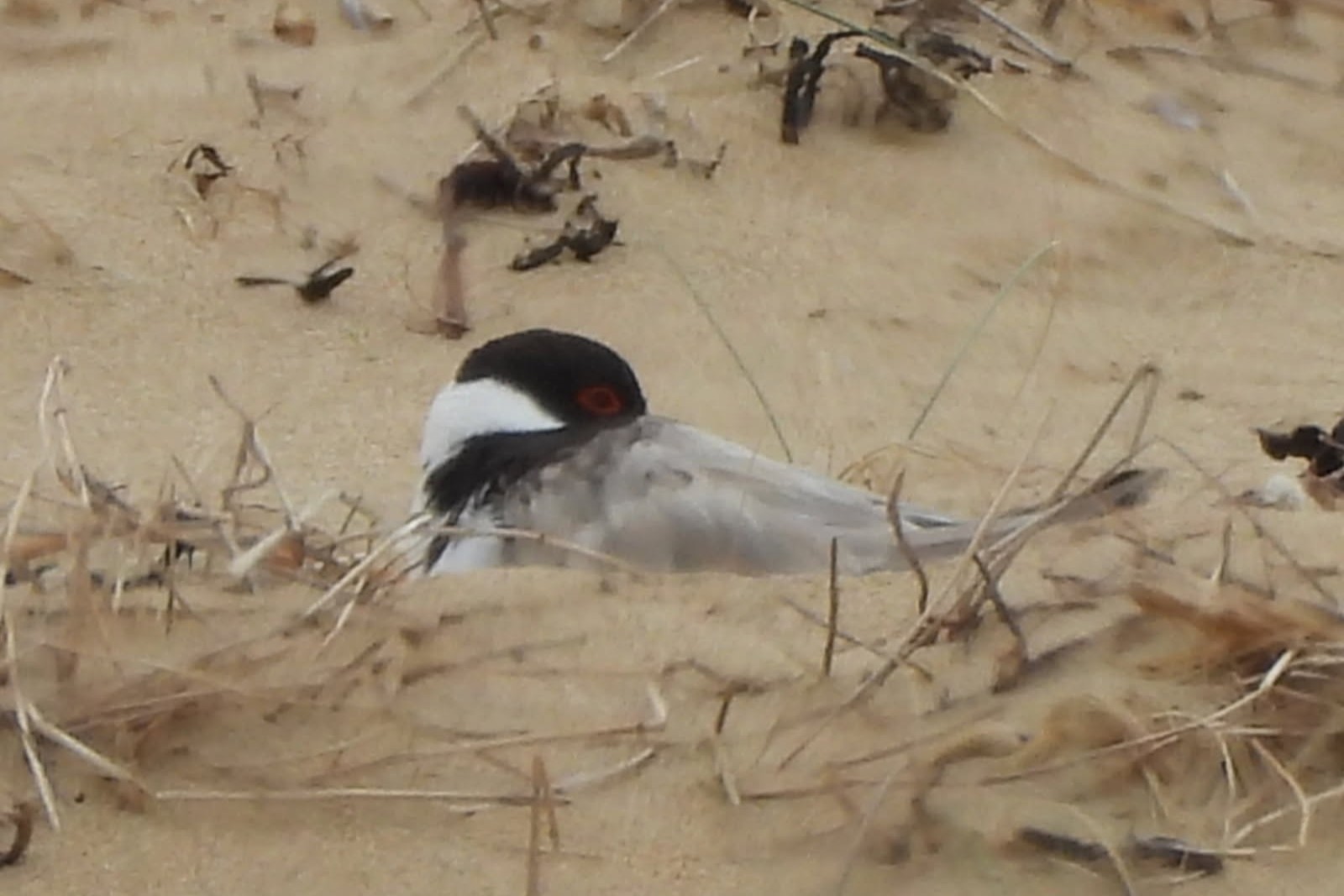
At Barwon Coast, we’re proud to work alongside local conservation groups to help protect one of Australia’s most vulnerable coastal birds — the Hooded Plover.
Affectionately known as ‘Hoodies’, these small, ground-nesting shorebirds are listed as protected wildlife under both State and Federal legislation. With only an estimated 740 birds left along the entire Victorian coastline (BirdLife Australia, 2022), every effort counts.
Our local stretch of coast is home to 11 resident breeding pairs, found in areas like Point Lonsdale, Collendina, Ocean Grove, Barwon Heads (13th Beach), and Breamlea.
Hoodies nest between September and March, laying their eggs directly on the sand — often in high-traffic areas. This makes them especially vulnerable to human disturbance, off-leash dogs, and introduced predators such as foxes and cats.
Together with our community partners, we’re working to protect their habitat and give these special birds the best chance to thrive.
You can make a difference
- Stay close to the water’s edge
- Obey signs and keep clear of fenced areas
- Keep dogs on a lead and out of breeding zones and sand dunes
Help protect the vulnerable birds
You can make a big difference in helping Hooded Plovers survive and thrive along our coast.
Hooded Plover Eggs – Hard to Spot, Easy to Harm
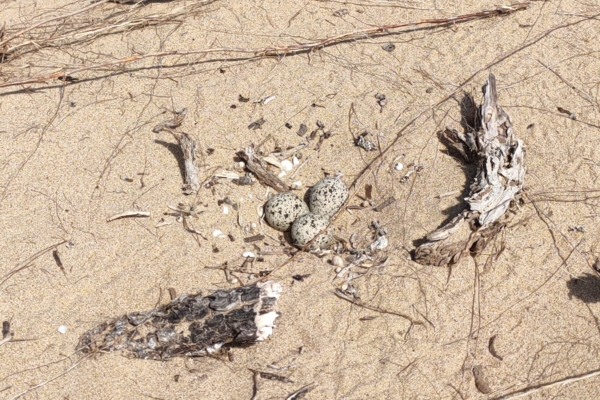
Hooded Plovers lay their eggs in a simple scrape in the sand, usually just above the high tide line on the dune side of the beach. These eggs are extremely well camouflaged and can be nearly impossible to see, making them easy to step on by accident.Each nesting pair typically incubates their eggs for around four weeks — a critical time when any disturbance can cause the adult birds to abandon the nest.Sticking to marked paths and walking below the high tide line can help give these tiny families the best chance of survival.
Hooded Plover Chicks – Small, Fragile, and Vulnerable
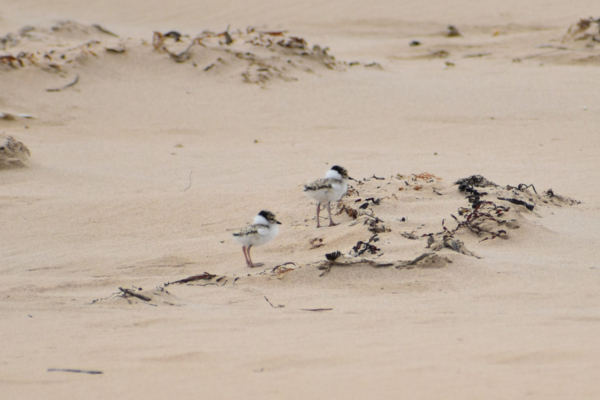
Once hatched, Hooded Plover chicks are tiny, flightless, and completely dependent on their surroundings. For the first five weeks, they must feed themselves along the water’s edge until they’re strong enough to fly.
During this time, they are incredibly vulnerable to disturbance from people, off-leash dogs, and predators. Even well-meaning beachgoers can accidentally scare chicks away from the food they need to survive.
When chicks are present on a beach, Barwon Coast will generally temporarily close small sections of beach during breeding season, these are known as Temporary Exclusion Zones.
Declared under the Crown Land (Reserves) Act 1978, these fenced areas must not be entered by people, dogs, or horses.
By respecting these zones, you’re helping to ensure wildlife has a safe space to rest, recover, and breed undisturbed. Thank you for doing your part to protect our precious coastal species.
Juvenile Hooded Plovers – Still Learning to Survive
Even after they’ve fledged, juvenile Hooded Plovers remain vulnerable as they continue to learn how to feed, fly, and stay safe along our busy coastline.You can help Barwon Coast protect these young birds by:
– Staying close to the water’s edge when walking on the beach
– Respecting signage and fenced nesting areas
– Keeping dogs on a lead and out of designated breeding zonesEvery small action helps give these special coastal birds the best chance to thrive. Thank you for caring for our coast and its wildlife.
Latest Hoodie Updates
Published on 26 March 2026
2025-26 Hooded Plover breeding season
A reflection on the 2025–26 Hooded Plover breeding season.

Published on 16 March 2026
Stingray Bay Hooded Plover chick takes flight
The Hooded Plover chick at Stingray Bay has been observed taking short flights along the beach.
Published on 16 February 2026
Hooded Plover update: Breamlea and Ocean Grove
An update on the Hooded Plovers breeding on Barwon Coast-managed land.
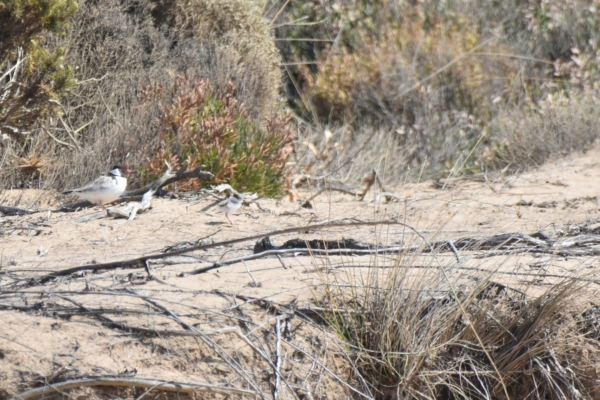
Published on 8 February 2026
Hooded Plover nest hatches
We’re pleased to share that there is a Hooded Plover chick at Stingray Bay.
Published on 28 January 2026
Hooded Plover nest update
We’re sad to share that some Hooded Plover nests have not survived recently.
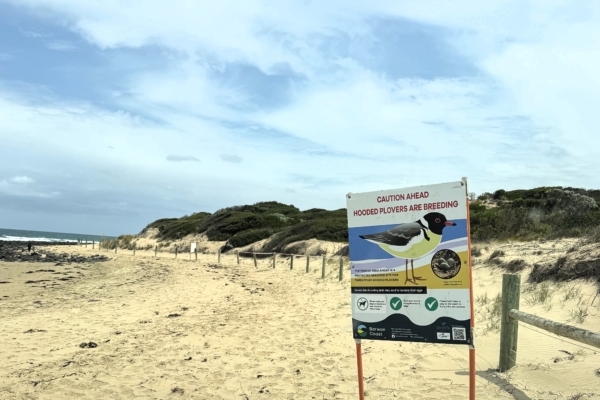
Published on 13 January 2026
Four Hooded Plover nests on the coast
We're excited to share that there are four Hooded Plover nests on the coastline we manage.
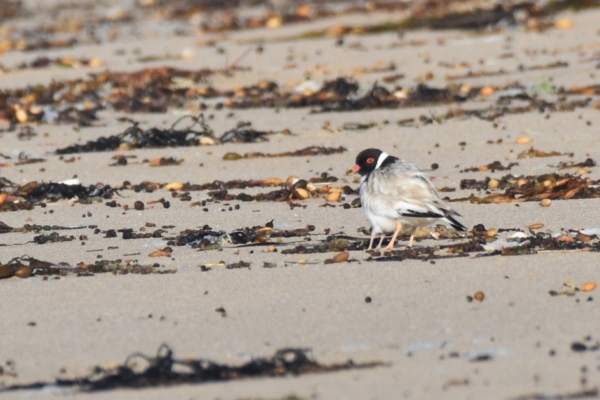
Published on 16 December 2025
Hooded Plover chicks thriving and new nests spotted
We\'re excited to share that the Hooded Plover nest in Ocean Grove has hatched.
Published on 13 December 2025
Hoodie nest hatches in Ocean Grove
We're excited to share that the Hooded Plover nest in Ocean Grove has hatched.
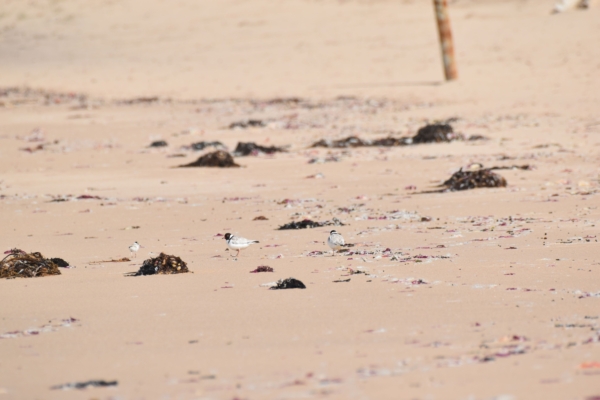
Published on 19 November 2025
Hooded Plover update: great news from Barwon Bluff
We're celebrating the two-week milestone for the Hoodie chick on Barwon Bluff.
Published on 12 November 2025
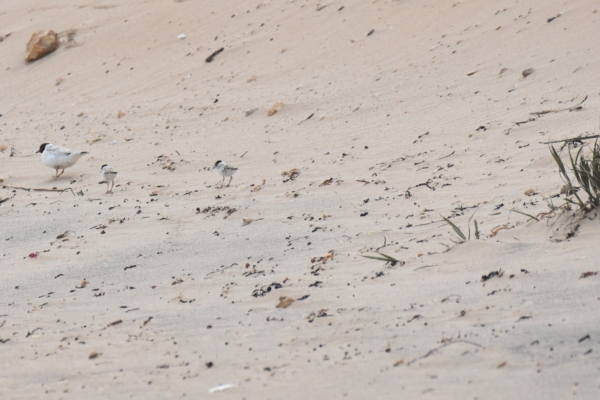
Celebrating the first week of our Hooded Plover chicks
We're celebrating the one-week birthday of our two Hoodie chicks on Barwon Bluff.
Published on 10 November 2025
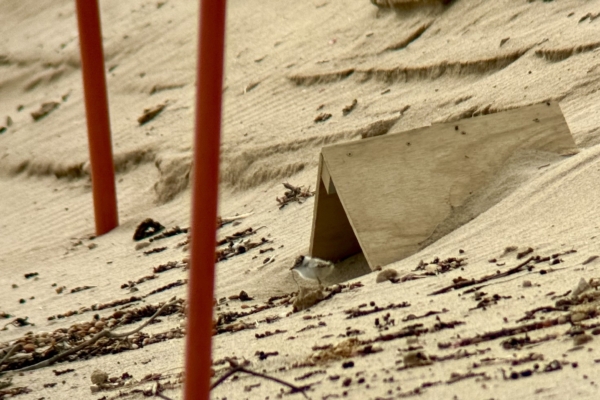
Hooded plover chicks at the Bluff still thriving
The two Hooded Plover chicks at the Bluff are still doing well.
Published on 6 November 2025
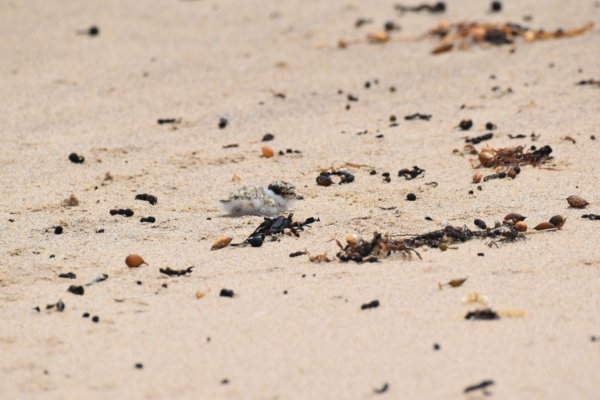
Hooded Plover chicks take their first steps at Barwon Bluff South
We’re thrilled to share a Hooded Plover nest located between Barwon Bluff South and The Corner, 13th Beach, has hatched two chicks.
Published on 16 September 2025
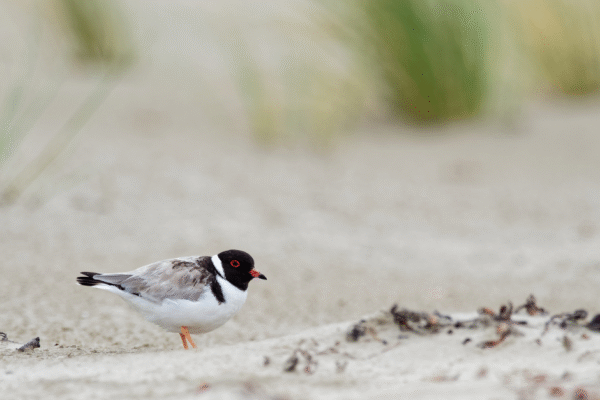
Celebrating Plover Appreciation Day – protecting our Hooded Plovers
Today is Plover Appreciation Day, a chance to recognise these remarkable ground-nesting birds.
Published on 20 June 2025
Hooded Plover Nesting Update
We currently have one active hooded plover nest that is expected to hatch in the coming weeks...
Temporary Exclusions Zones
Hooded Plovers nest on our beaches during the busy summer months, often competing for space with people and pets. To give these vulnerable birds the best chance of survival, Barwon Coast may temporarily close small sections of beach during breeding season — these are known as Temporary Exclusion Zones.
Declared under the Crown Land (Reserves) Act 1978, these fenced areas must not be entered by people, dogs, or horses.
By respecting these zones, you’re helping to ensure wildlife has a safe space to rest, recover, and breed undisturbed. Thank you for doing your part to protect our precious coastal species.
🌈🦜 Our noisy, colourful, busy neighbours!
You’ll often hear Rainbow Lorikeets before you see them – screeching and chattering as they race overhead .
With their bright red beaks, blue heads, green wings and backs, and orange-yellow breasts, they’re certainly not shy about standing out.
Rainbow Lorikeets are right at home in our coastal and urban landscapes, particularly wherever there are plenty of trees. They spend much of their time among flowering shrubs and trees, feeding on nectar and pollen, as well as fruit, seeds and the occasional insect.
And when the day is done? You might spot – or more likely hear – groups gathering together to roost at dusk.
Noisy, colourful and always busy – we reckon they bring plenty of personality to our coast. 💚
Learn more from BirdLife Australia: https://birdlife.org.au/bird-profiles/rainbow-lorikeet/Open post by barwoncoast with ID 17877787428626563
🌿 The Barwon Heads Nature Festival is almost here!
From 21–25 September, Friends of the Bluff are bringing together an amazing program of events celebrating the wonderful natural environment of Barwon Heads. There’s lots to explore, including some fantastic events happening across our coastal foreshore reserves:
🥾 Monday 21 September – Explore Barwon Bluff, plus two Canoe the Mangroves sessions
🌱 Tuesday 22 September – Walk on Country @ Barwon Bluff with @Wadawurrung
🌊 Wednesday 23 September – Orchids in the Park, then Land, Sea, Sky slide night
🔬 Thursday 24 September – Tide & Seek: a family ‘marine science’ day
🧤 Friday 25 September – Barwon Heads Great Spring Clean Up, followed by the Turning the Tide short film festival that evening.
There’s plenty more happening throughout the festival too!
Explore the full program and find out how to get involved: https://www.barwonbluff.com.au/nature-festival/
Congratulations to Friends of the Bluff and everyone involved in putting together another fantastic celebration of our coast. 💚Open post by barwoncoast with ID 18003910007791685
🐌 Go searching for sea slugs at Barwon Bluff!🌊
Did you know Victoria is home to more than 400 species of colourful sea slugs?
Join Parks Victoria (@parksvic ) for a Sea Slug Census in the intertidal rockpools of the Barwon Bluff Marine Sanctuary and see what you can discover.
📅 Thursday 17 September
⏰ 9.30–11.30am
📍 Barwon Bluff Marine Sanctuary
Learn more about these fascinating marine creatures while helping contribute valuable observations to the Victorian Marine Parks Association database and iNaturalist.
Registrations are essential.
Find out more and register via www.parkconnect.vic.gov.au/volunteer-activities (search for `sea slug`)Open post by barwoncoast with ID 18062185166609315
A cuppa, a chat and an important question – R U OK? 💛
Today our team came together for an R U OK?Day morning tea and heard from our Employee Assistance Program provider about the confidential health and wellbeing support available to our staff and their families.
It was a great reminder to make time for genuine conversations – today and every day.
Ask R U OK? Any day. 💛
#RUOKDay #RUOK #WorkplaceWellbeingOpen post by barwoncoast with ID 18120793300911347
🥚 Hoodie nest update!
We’re pleased to share that there are currently two active Hooded Plover nests – at Blue Rocks and near Signpost at 13th Beach – each with three eggs. 🤞
Hoodies nest directly on the sand, and their tiny, camouflaged eggs can be almost impossible to spot. They’re also easily disturbed, so please give them plenty of space.
🩵 Keep close to the waterline
🩵 Keep dogs on lead near nesting areas
🩵 Stay outside fenced or roped-off areas
Six little eggs – fingers crossed we`ll see some little chicks! 🐣
#HoodedPlovers #BarwonCoastHoodieWatchOpen post by barwoncoast with ID 18088144943208650
💙 Happy Father’s Day!
Wishing a very happy Father’s Day to all the wonderful fathers and father figures in our community!
If you’re looking for something fun to do with Dad today and haven’t, ahem, made a solid plan yet… why not swing by the Barwon Coast Discovery Centre in Barwon Heads? 🐚
Housed in the historic Lobster Pot, there’s plenty to explore – from local marine life and wildlife to geology, shipwrecks and local history.
🦀 Open today, 1–4pm
📍 Jetty Road, Barwon Heads
🌊 Free entry – all ages welcome
Perfect for a little Father’s Day wander by the coast.
More information: https://barwoncoast.com.au/about-the-coast/barwon-coast-discovery-centre/Open post by barwoncoast with ID 18117019076289796
Species spotlight: Sooty Oystercatchers 🖤❤️
Have you spotted a Sooty Oystercatcher along our coast?
With their striking all-black plumage, long red bill and bright red eyes, these distinctive shorebirds are amazing to spot along our coast – although their dark colour can make them tricky to see against the basalt of our coastal reefs.
📸 A big thank you to Rod Morrison for these fantastic photos!
Got a great photo of local wildlife? We’d love to see it – share it with us in the comments or send it our way.
And if you’d like to learn more about the birds you might spot around Barwon Bluff, our friends at Friends of the Bluff Barwon Heads have put together some great information.
👉 Check out their Sky – Birds page: https://www.barwonbluff.com.au/sky-birds/
A quick reminder about bird flu: If you come across sick or dead birds along the coast, please don’t touch or handle them. Keep your distance, keep dogs away and report sightings to the relevant authorities. Reports of sick and dead birds are important in helping authorities monitor for avian influenza. More info: agriculture.vic.gov.au/birdfluOpen post by barwoncoast with ID 18405996016095836
🌊 The Barwon Coast Discovery Centre is back from this Sunday! 🐚
After a winter break, the doors of will be open this Sunday, and there’s plenty to discover inside.
Drop in and explore the stories of our coast – from local marine life, plants and wildlife to geology, shipwrecks and local history. You can also have a chat with one of the wonderful Friends of The Lobster Pot volunteers, who always have plenty of knowledge to share.
🦀 Open Sundays, 1–4pm
📍 Jetty Road, Barwon Heads
🌊 Free entry – all ages welcome
Come in, have a look around and discover something new about the coast .
More information: https://barwoncoast.com.au/about-the-coast/barwon-coast-discovery-centre/
#BarwonCoast #BarwonHeads #DiscoveryCentreOpen post by barwoncoast with ID 18119837329925682
🌸 Hello, spring! 🐝
As we welcome a new season, we’re feeling pretty lucky to experience this special stretch of coast in all its seasons.
There’s a lot to love about a coastal winter – wild seas, moody skies, quiet beaches and those crisp, clear days. But we’re also happy to see the first signs of spring appearing across the coastal foreshore.
Coastal plants are starting to flower, warmer days are sneaking in (along with some pretty hectic rain!) and Hooded Plover breeding season is underway once again. Please keep your fingers crossed for a successful season for these vulnerable little birds. 🤞🐦
Here’s to spring on the coast – new life, changing landscapes and plenty more wild weather along the way. 🌿🌊Open post by barwoncoast with ID 18223003876335922
We have Hooded Plover nest lift-off! 🥚
We have discovered this little nest on 13th Beach (Black Rock end) and are hoping to see a little family here in around four weeks` time. Our keen-eyed staff have also noticed scrapes (Hoodies usually lay their eggs in shallow scrapes in the sand) at Stingray Bay, Breamlea, and near @13thbeachslsc - exciting!
When enjoying the coast, beachgoers are asked to help protect this nest by:
🩵 Walking close to the waterline
🩵 Keeping well clear of fenced or roped-off areas
🩵 Keeping dogs on-lead and away from sensitive dune areas
🩵 Giving the birds plenty of space so they do not abandon their eggs
Every small action helps give Hooded Plovers the best chance to hatch and thrive. Thank you for taking care on our beaches.Open post by barwoncoast with ID 18079966946333677

This is Wadawurrung Country. We acknowledge the Wadawurrung People as the Traditional Owners of the land, waters, seas and skies of Ocean Grove, Barwon Heads, 13th Beach, Black Rock and Breamlea. We honour and say Nyatne to Elders past, present and future whose ancestors, for thousands of years, have cared for this part of Dja (Country). We are committed as an organisation to meaningfully work together with Traditional Owners to make Wadawurrung Culture and Country strong.
© 2026 Barwon Coast. Website by Residency Studios.
- Get Involved
- Access & Use
- Our Work
- Who We Are


